

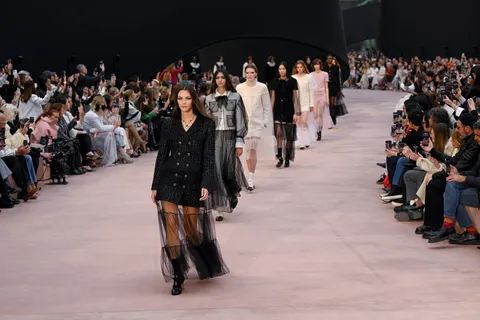
In an era dominated by hyper-accelerated trend cycles and mass production, the ultimate luxury flex is no longer owning the newest look straight off the runway. Instead, true status has shifted toward the acquisition of history. Elite consumers are increasingly turning away from seasonal collections in favor of rare, historical archival pieces—transforming fashion from a transient purchase into a form of cultural curation.
This movement toward circular luxury represents a profound evolution in how we define exclusivity, sustainability, and personal expression.
The Premium Resale Landscape: Trust via Technological Curation
Historically, the secondary market for luxury fashion was restricted to specialized brick-and-mortar boutiques and high-end auction houses, inherently limiting its reach. Today, a sophisticated digital infrastructure has completely democratized access to the world’s most coveted closets while reinforcing institutional trust.
The proliferation of advanced digital authentication platforms has effectively mitigated the risk of counterfeits, allowing collectors to deploy significant capital with absolute confidence. Utilizing a combination of machine-learning fabric analysis, artificial intelligence string verification, and human specialists, these platforms evaluate everything from stitch-count precision to zipper metallurgy. This institutional framework has normalized the concept of high-end vintage, shifting consumer behavior toward viewing premium garments not as depreciating goods, but as liquid investment assets.
Curating Your Archive: A Strategic Guide to Vintage Acquisitions
Building a collection of archival fashion requires the same analytical rigor one would apply to fine art or rare horology. The transition from an enthusiast to a serious archivist relies heavily on three core strategic pillars:
- Identifying Iconic Eras: Focus on era-defining runway collections that represent tectonic shifts in design philosophy. Target pieces from landmark periods—such as Tom Ford’s high-octane minimalism at Gucci in the late 1990s, Lee Alexander McQueen’s early theatrical collections, or Martin Margiela’s deconstructive masterpieces from his independent tenure.
- Evaluating Provenance and Condition: The value of an archival piece is inextricably tied to its condition and documentation. Pristine runway samples, garments with documented editorial history, or pieces retaining original luxury house tags command exponentially higher premiums on the secondary market.
- Museum-Grade Preservation: Archival textiles require strict environmental controls to prevent degradation. Professional collectors invest in climate-controlled storage characterized by specific humidity levels, acid-free tissue wrapping, and custom-padded storage solutions to preserve structural integrity for decades.
Conclusion: The Ultimate Sustainable Statement
The trajectory of global high fashion is clear: circularity is the new frontier of luxury. By acquiring high-end vintage and archival pieces, elite consumers are effectively stepping outside the consumerist wheelhouse, making a distinct ecological statement without compromising an ounce of style.
Navigating this space requires patience, deep historical appreciation, and a sharp eye for design provenance. Ultimately, an investment in archival fashion is an investment in timeless artistic sovereignty—ensuring that your wardrobe tells a story that transcends the passing of seasons.